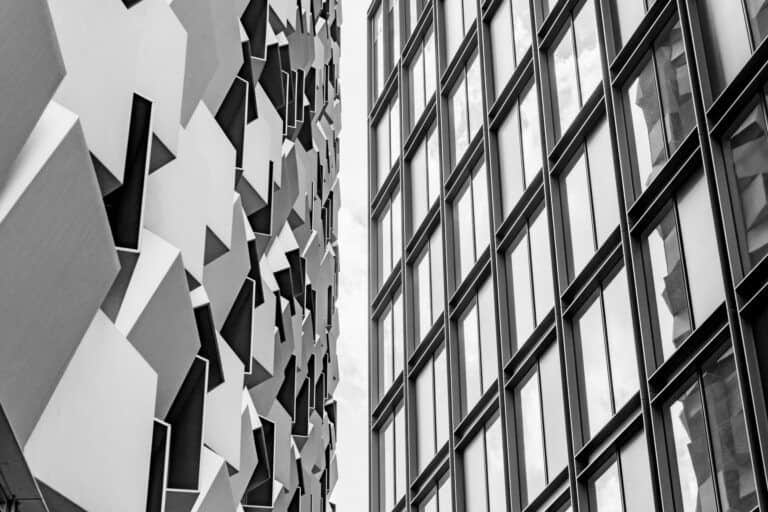
Architectural Photography in Yorkshire: A Guide for Developers, Architects, and Property Professionals
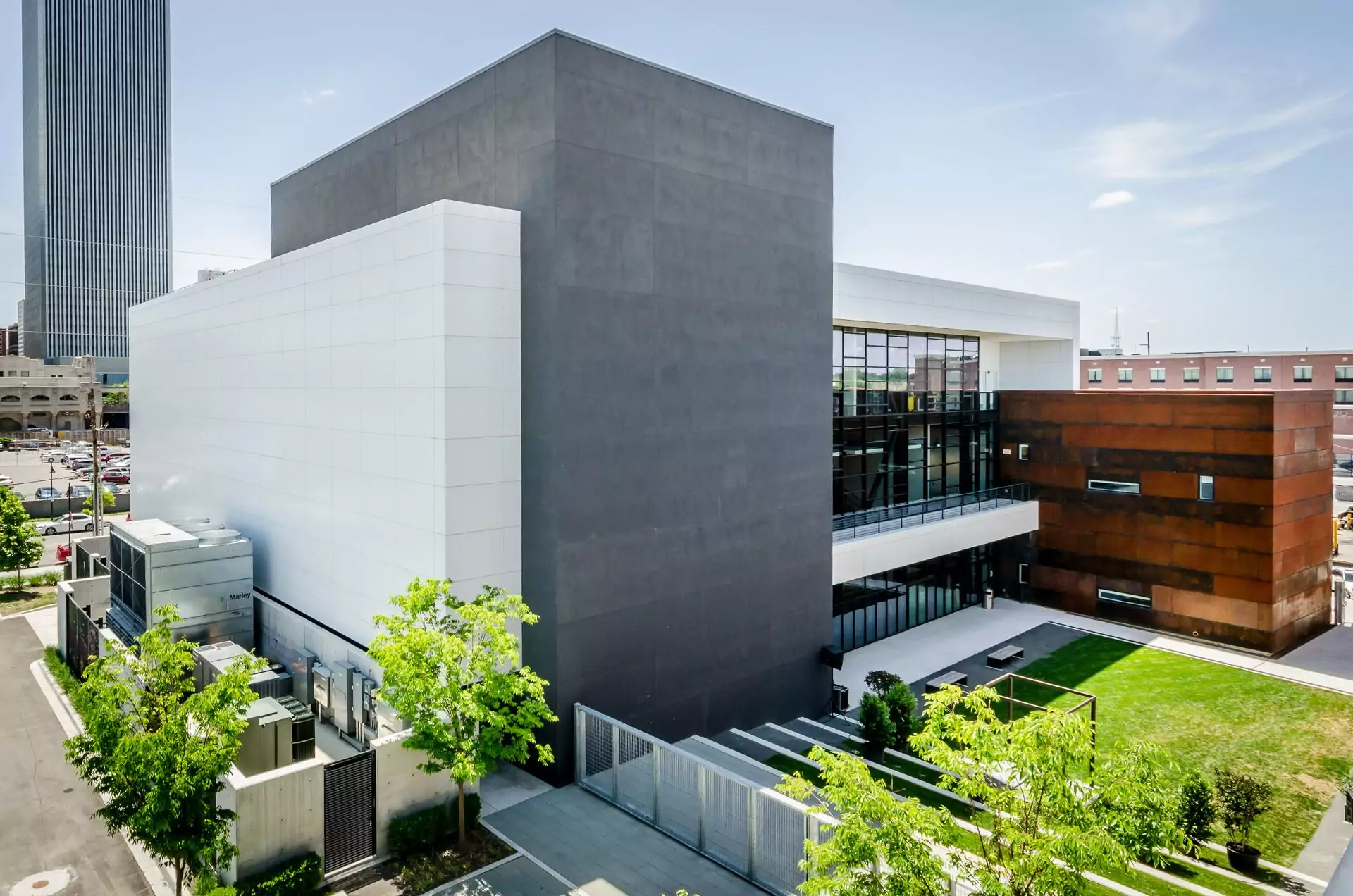
Professional architectural photography gives developers, architects and property professionals imagery that does real commercial work: supporting planning applications, driving enquiries, and presenting buildings at their absolute best. I’m an award-winning photographer based in Huddersfield, West Yorkshire, and I’ve photographed buildings and spaces in more than 40 countries over the course of my career. This guide covers who commissions architectural photography in Yorkshire, how a professional shoot actually works, and what to look for when you’re hiring.
The question I hear most often from new clients is some variation of: “What actually makes architectural photography worth the investment?” It’s a fair question. You see your building every day – you know what it looks like. What you need is imagery that makes someone else stop scrolling and pay attention.
Architectural photography in Yorkshire covers an enormous range of briefs. I work with property developers needing exterior shots for planning applications and marketing campaigns. I work with architects who need portfolio imagery that showcases the thought and craft behind their designs. I work with commercial landlords, estate agents, and hospitality businesses who need interiors photography that converts browsers into enquiries. The brief changes; the standard doesn’t.
What Is Architectural Photography, Really?
Put simply, it’s the specialist craft of photographing buildings and spaces so they communicate how a place feels: the scale, the light, the relationship between materials, and the way people will move through it. There’s a tendency to think of it as simply “photos of buildings”, and that undersells it considerably. A flat exterior shot taken on a grey afternoon tells a potential buyer very little. A well-composed image, taken at the right time of day with the right focal length and post-processing, tells a story.
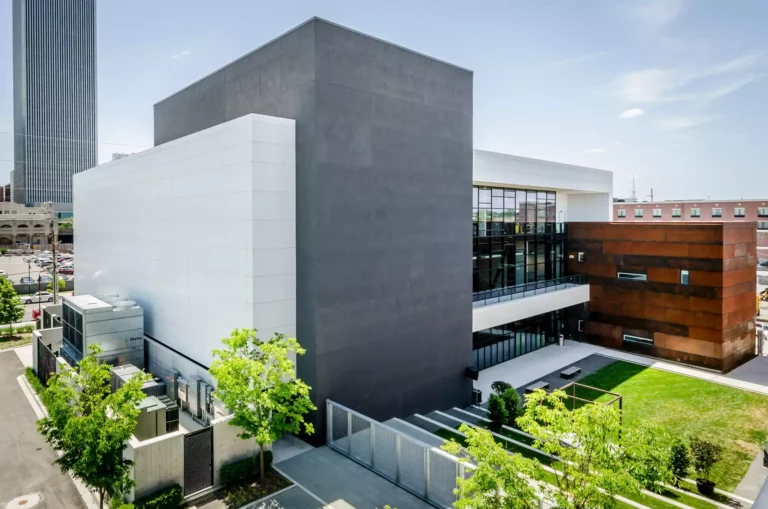
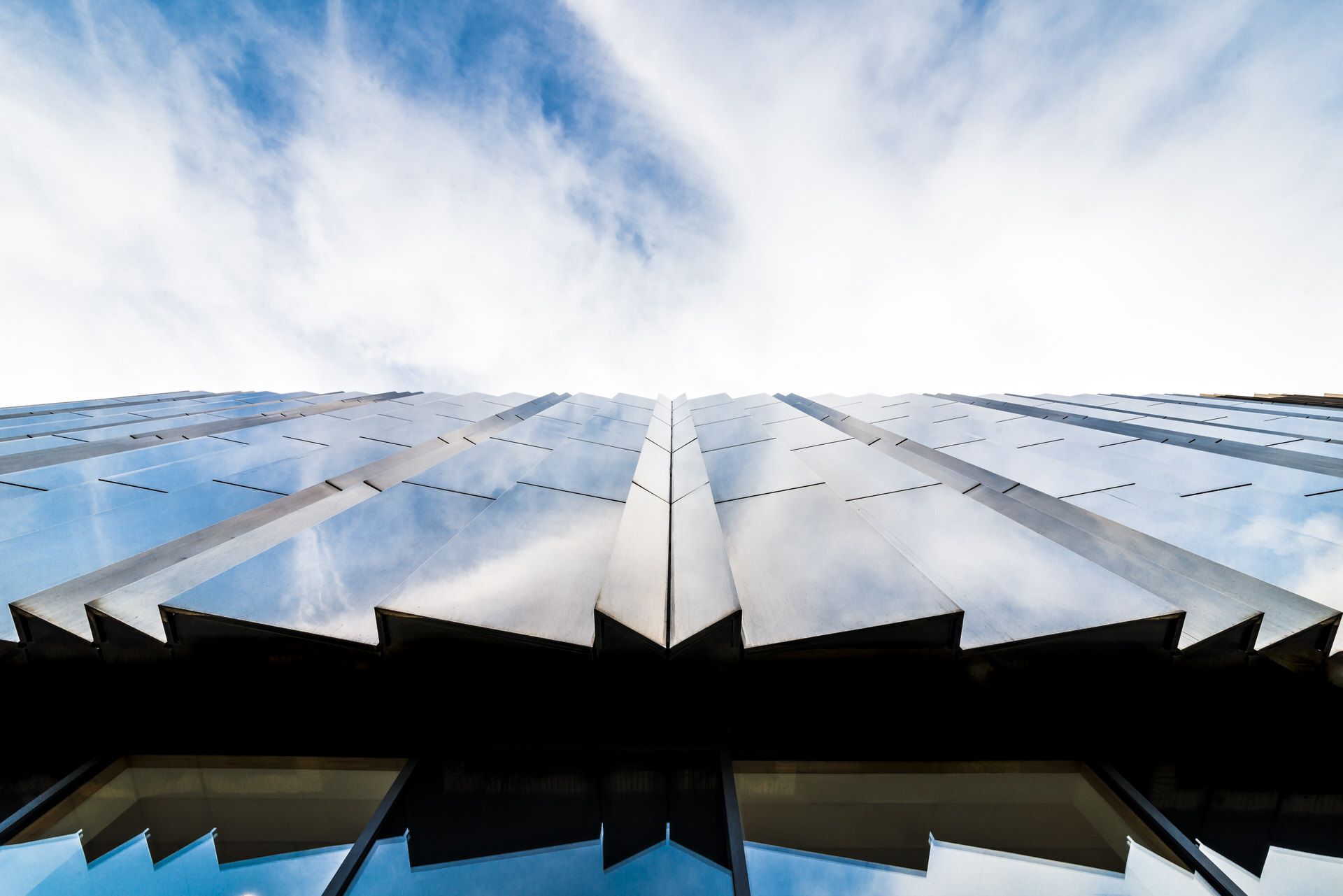
A core part of the discipline is correcting perspective distortion, the effect that makes buildings appear to lean backwards when they’re photographed with standard lenses. Controlling it takes specialist equipment, careful positioning on site, and precise post-processing, and it’s one of the technical details that separates professional architectural photography from what a generalist produces. Yorkshire has some genuinely striking architecture – from the industrial mill conversions in Leeds and Bradford to the modern commercial developments in Sheffield and Harrogate – and those buildings deserve to be photographed properly.
Who Commissions Architectural Photography in Yorkshire?
My clients come from right across the property and design sector. Here’s where the demand typically comes from:
- Property developers – needing high-quality exterior and interior imagery for sales brochures, planning applications, investor packs, and digital listings.
- Architects and design practices – building portfolio imagery for award entries, practice websites, and pitching to new clients.
- Commercial landlords and agents – photographing office, retail, and industrial spaces for letting campaigns and marketing materials.
- Hospitality businesses – hotels, restaurants, and leisure venues needing interiors imagery that performs on booking platforms.
- Construction companies – documenting project progress and completed builds for case studies, PR, and business development.
Across all of these, the common thread is that the photography has a job to do. It’s not art for the wall – it’s imagery with a commercial purpose, whether that’s generating enquiries, winning an award nomination, or helping a letting agent achieve a better yield.
How Should You Prepare for an Architectural Photography Shoot?
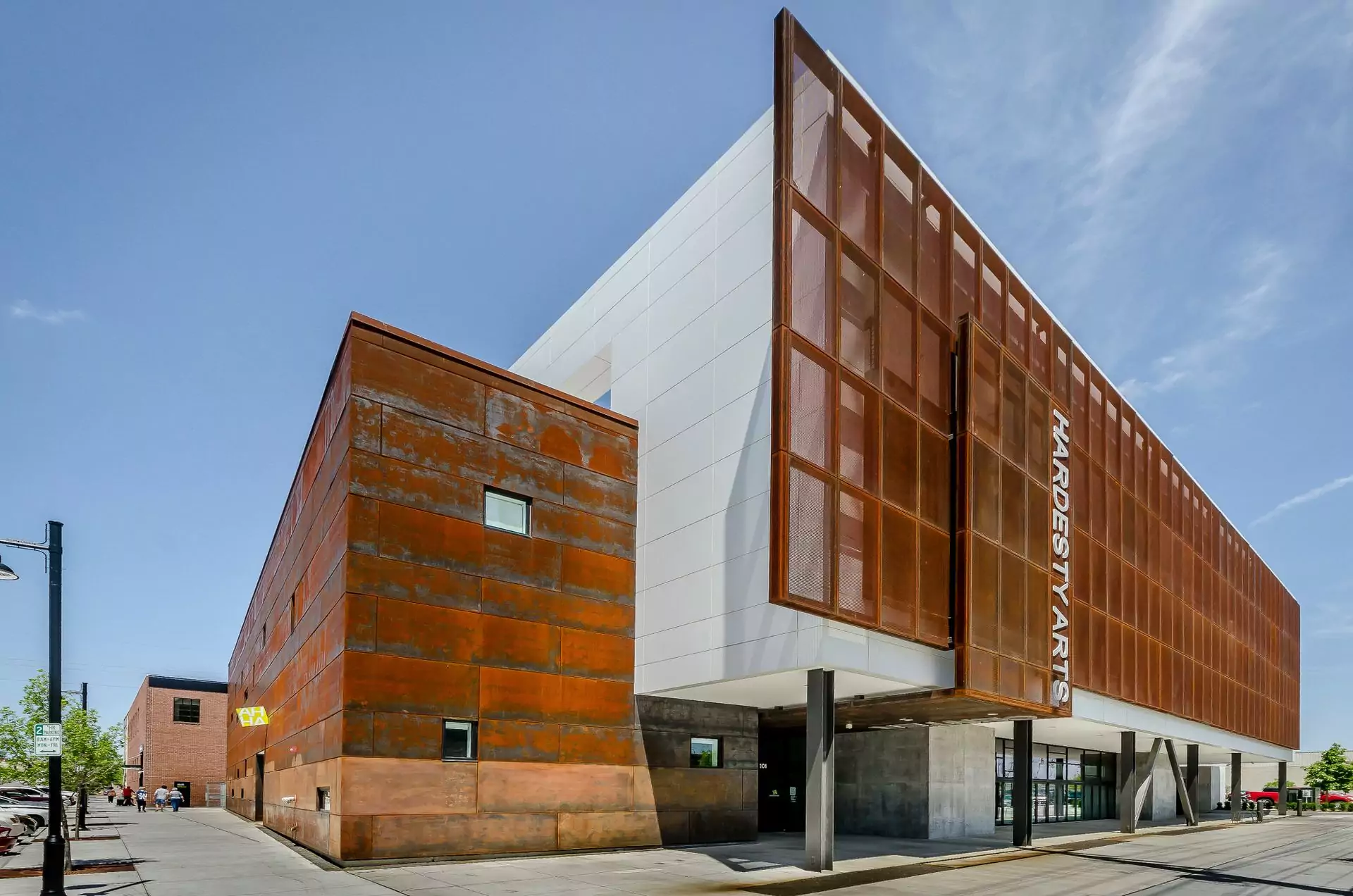
Good preparation starts well before anyone arrives on site, with a detailed conversation about objectives. What is the photography being used for? Who is the target audience? Are there specific angles or features that need to be captured? For complex shoots I always visit the location in advance, particularly where access, lighting direction, or the surrounding context (neighbouring buildings, road traffic, landscaping) will affect how we approach the brief.
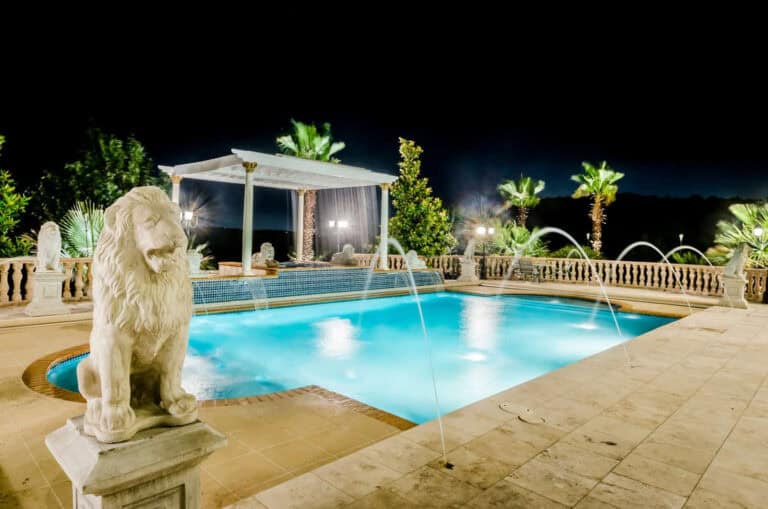
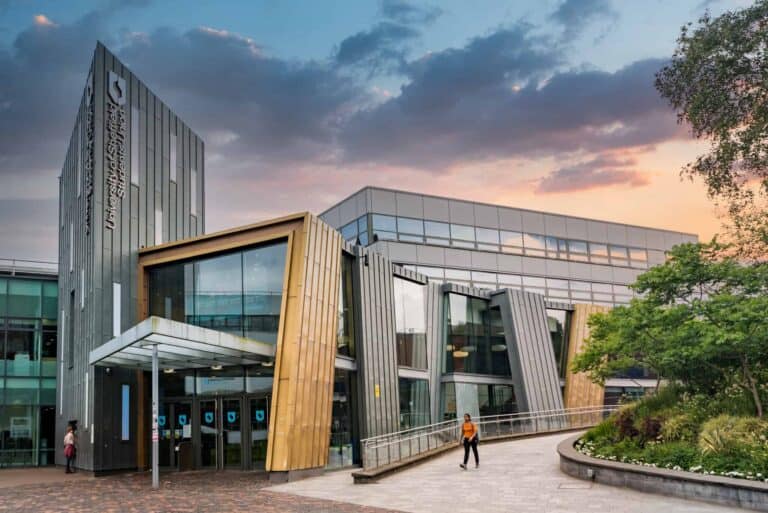
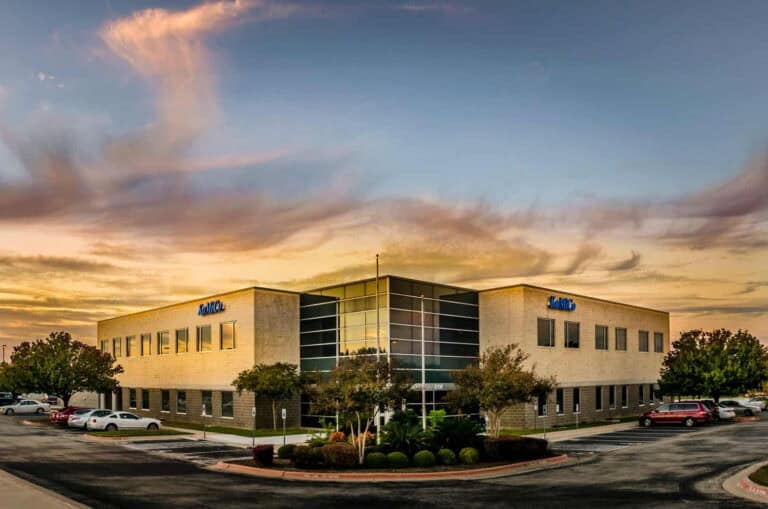
Timing is critical. In Yorkshire, the golden hour – that window roughly an hour after sunrise or before sunset – produces the warmest, most dimensional light for exterior architecture. I plan shooting schedules around the direction a building faces and the time of year. Shooting a south-facing, glass-fronted office block at noon in July means fighting blown highlights and harsh shadows. Returning at 7am, or on an overcast day where the light is diffused evenly, produces an entirely different result.
For interiors, I use a combination of natural light, supplementary lighting, and bracketed exposures depending on the space. A heritage stone barn conversion in the Dales requires a completely different approach to a contemporary open-plan office in Leeds city centre. The preparation for each is different; the commitment to the final result is the same.
How Does Architectural Photography Support Property Marketing?
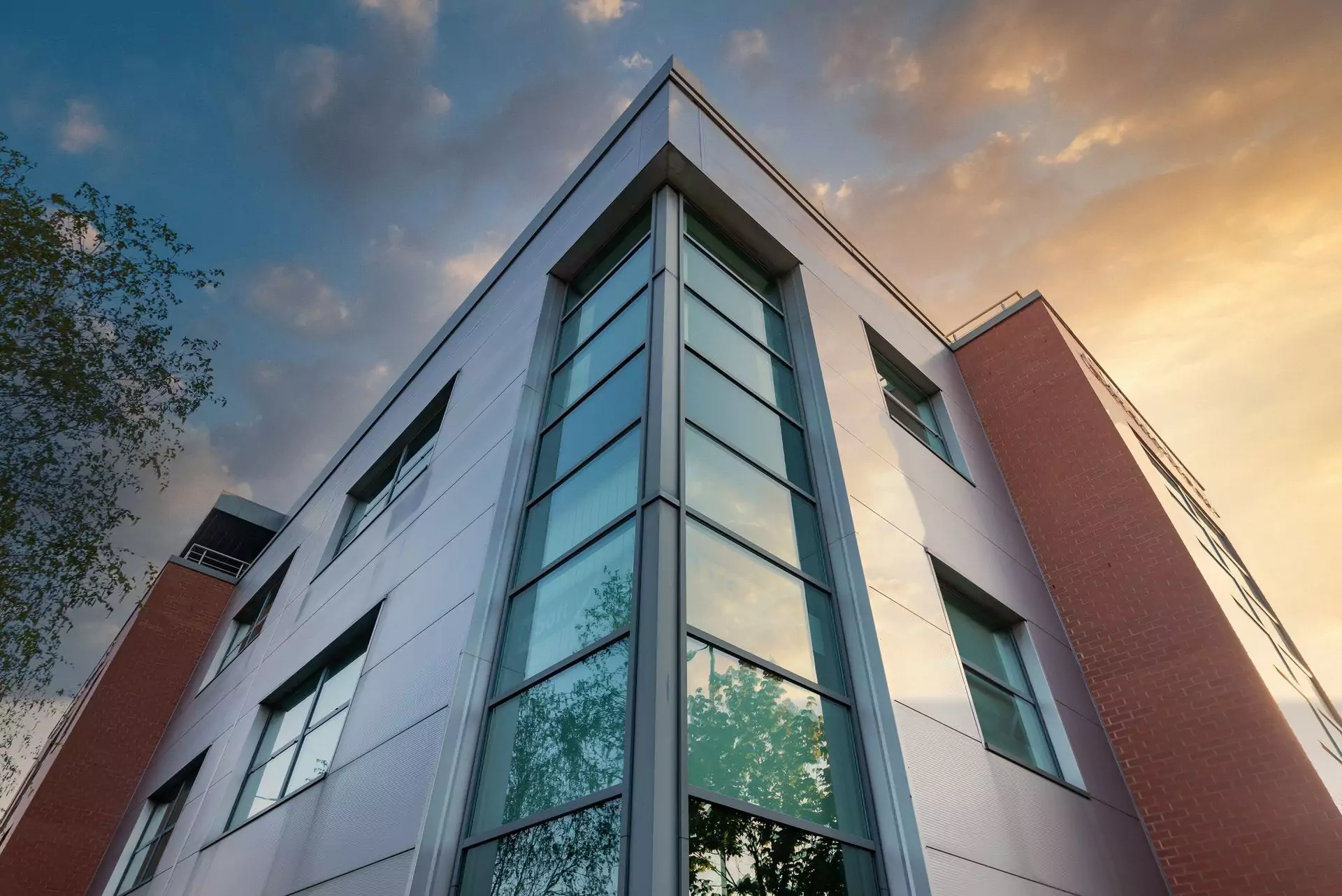
Professionally photographed listings consistently generate more enquiries, sell faster, and in many cases achieve stronger prices. I wrote about this in more detail in How Professional Architectural Photography Can Boost Your Property Listings – worth reading if the property marketing angle is your main interest.
Beyond the immediate commercial impact, there’s a longer-term brand consideration. Developers and architects who consistently invest in professional imagery build a recognisable visual standard across their portfolio, and over time that consistency becomes part of the brand. When someone in the property sector in Leeds or Harrogate sees a certain quality of imagery, they start to associate it with a certain quality of work. That association has real commercial value.
What Should You Look for in an Architectural Photographer?
Not every professional photographer has the technical knowledge and equipment for architectural work – it’s a specialist discipline, and it’s worth knowing what separates a specialist before you commission. Here’s what I’d look for:
- A specialist portfolio – look for range across interior and exterior, different building types, and different lighting conditions. A strong architectural portfolio demonstrates consistent technical control.
- The right equipment – specialist perspective-control lenses, a sturdy tripod, and experience with lighting equipment for interiors are baseline requirements for serious work.
- A proper pre-shoot process – a professional will ask detailed questions before the shoot, not just turn up and start photographing.
- Post-production quality – architectural photography requires careful retouching: perspective correction, vertical alignment, and consistent colour grading. Ask to see the editing standard before you commission.
- Experience with your type of project – residential, commercial, industrial, and hospitality photography each have their own technical and creative demands. Make sure whoever you commission has worked extensively in your sector.
Which Parts of Yorkshire Do I Cover?
I’m based in Huddersfield, West Yorkshire, which puts me right in the centre of a region with a genuinely varied architectural landscape. In a single week I might be photographing a converted mill development in Bradford, a new-build commercial scheme in Sheffield, a country house hotel in the Dales, and a waterfront office complex in Leeds. That range keeps the work interesting, and it means I bring a breadth of experience to every brief.
We work across the UK and into Europe when briefs require it. If you have a project that needs professional architectural photography in Yorkshire – or anywhere beyond – I’d welcome the conversation. Every brief is different, and I always work closely with clients to understand exactly what the photography needs to achieve.
Get in touch to discuss your project, and we can talk through scope, timing, and how to get the most from your architectural photography brief.