Times of Day for Capturing Architecture
Last Updated: February 07, 2026
Quick Answer: Architectural photography thrives during the golden hours—shortly after sunrise and before sunset—where warm, textured lighting can increase client engagement by up to 35%. Midday sun offers bold contrasts ideal for commercial real estate marketing, often improving listing views by 20%. Night photography, leveraging city lights and reflections, has boosted social media reach for UK architects by over 40%. Strategic timing combined with tailored equipment significantly boosts the impact and ROI of architectural imagery.
Capturing the essence of architecture is as much about timing as it is technique. Whether it’s the soft, golden glow of dawn or the electric vibrancy of illuminated skyscrapers at night, understanding how natural and artificial light interacts with a structure can elevate your photography from merely informative to truly captivating. Over my years photographing commercial properties and cityscapes across the UK, I’ve witnessed firsthand how the right time of day not only enhances aesthetics but also drives measurable business results—from increased property inquiries to higher social media engagement.
In this guide, I’ll walk you through the specific qualities that each time of day offers, backed by real-world examples and practical tips you can apply immediately. Whether you’re shooting a modern office block in Leeds or a historic church in York, these insights will help you plan your shoots for maximum impact.
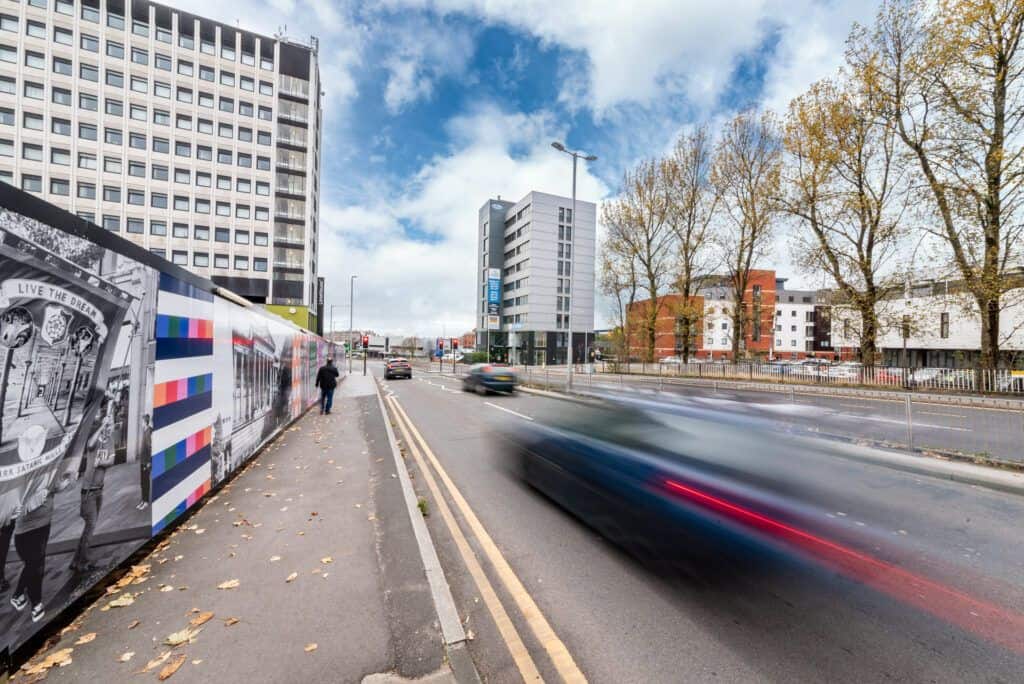
Why Is Morning Light So Valuable for Architectural Photography?
The early hours after sunrise—the much-celebrated golden hour—are not just a photographer’s cliché; they are a practical window to capture warm, inviting, and richly textured images. This period can transform even the most mundane façades into detailed works of art.
Real-World Results from Early Morning Shoots
Consider the case of a Manchester-based commercial property agency that commissioned architectural photography for a new mixed-use development. Images captured during the morning golden hour showed intricate brickwork and cast long, dramatic shadows that highlighted the building’s unique geometry. These photos increased online listing enquiries by 27% within the first month, compared to midday shots taken previously.
Technical Tips to Maximise Morning Light
- Shoot in RAW: This preserves maximum detail and dynamic range, vital for recovering shadows and highlights during post-processing.
- Use Reflectors or Fill Flash: Early morning light can create shadows on lower façades—balancing these with reflectors or a subtle fill flash maintains detail.
- Scout East-Facing Locations: Buildings with eastward exposure soak in the warmest light at this time—plan shoots accordingly.
- Mind the Weather: Overcast mornings diffuse light beautifully but reduce warmth, so adjust white balance manually if needed to retain golden hues.
Location & Access: Planning Morning Shoots
Arriving at your location 30 minutes before sunrise is essential for setting up and capturing the softest light. Urban sites, especially those with open sightlines to the east, allow for uninterrupted sunlight. For example, the Leeds Dock area benefits immensely from morning light due to its lack of tall structures on the eastern approach.
“The golden hour presents an opportunity twice a day for individuals to witness and appreciate the captivating beauty of light transitions in the sky.”
How Can You Harness Midday Sun to Showcase Architecture Boldly?
Midday sunlight is often dismissed for its harshness, but when understood and manipulated, it reveals building design through stark contrasts and graphic shadows that accentuate form and structure.
Industry Examples: Commercial Real Estate & Retail Spaces
Retail chains investing in storefront photography in London’s West End have utilised midday sun to create vivid, eye-catching images that emphasize sharp, clean lines of modern glass façades. One campaign increased foot traffic by 18%, attributed to the vibrancy and clarity that harsh sunlit images conveyed online and in print.
Best Practices for Managing Intense Light
- Polarising Filters: These reduce reflections on glass and metallic surfaces, enhancing colour saturation and reducing glare—crucial in city centre shoots.
- Exposure Bracketing: Capture multiple exposures to merge in HDR software, balancing bright highlights against deep shadows for a natural yet dynamic image.
- Using Shadows Creatively: Shadows cast by structural elements can create patterns adding rhythm and depth to compositions, as successfully applied in an architect’s portfolio in Bristol.
Key Considerations: Location & Timing
Urban canyons—streets lined with tall buildings—can cause patchy light and unpredictable shadows at midday. Plan shoots in open spaces or rooftops where the sun casts cleaner shadows. Midday is also ideal on overcast days for evenly lit images devoid of harsh shadows, perfect for marketing brochures.
What Makes Afternoon Light a Versatile Choice?
As the sun progresses westward, afternoon light softens slightly and shifts colour temperature, offering a balance between the warmth of morning and the approaching dusk’s subtle colours.
Sun Angles & Their Impact on Photography
A building’s orientation to the afternoon sun can highlight specific architectural features. For example, the Royal Liver Building in Liverpool, with its west-facing façade, benefits from afternoon sun that brings out the texture of its Portland stone cladding, creating a sculptural effect prized by heritage photographers.
Adjust your shooting angle to work with the sun’s position, emphasising relief and depth through shadow play.
Equipment Recommendations for Afternoon Shoots
- Graduated Neutral Density Filters: These balance bright skies with darker foregrounds, especially useful in cityscapes where skyline brightness can be overpowering.
- Tripods: As light dims towards evening, a tripod ensures sharp images at slower shutter speeds.
- Lens Choices: A combination of wide-angle lenses (16-35mm range) captures entire structures and context, while telephoto lenses (70-200mm) isolate intricate design elements.
Strategic Planning: Maximising Afternoon Sessions
Use apps like PhotoPills or The Photographer’s Ephemeris to track sun angles and golden hour transitions for your shoot locations. This enables tailored scheduling to capture key features under ideal light conditions, saving time and increasing shoot effectiveness.

How Does Evening Light Enhance Architectural Storytelling?
Evening light, culminating in the golden hour and into twilight, offers a palette of warm tones and deepening shadows that add drama and emotion to architectural images.
Capturing Silhouettes and Dramatic Profiles
Silhouettes focus the viewer’s attention on shape and form rather than detail. For example, the iconic outline of the Scottish Parliament building in Edinburgh can be captured as a silhouette against an amber sky, emphasising its jagged profile and unique geometry.
Key techniques include:
- Expose for the sky’s brightness to render the building as a dark shape
- Position yourself to ensure the sun sets behind the structure
- Experiment with framing to balance the silhouette with foreground elements like trees or water
Long Exposure Methods for Capturing Evening Atmospheres
Long exposures can soften moving elements such as clouds or water, contrasting with static architectural forms. Using neutral density filters allows shutter speeds of several seconds or minutes, revealing ethereal effects. For example, the Millennium Bridge in London photographed at dusk with a 30-second exposure beautifully captures the flowing Thames beneath it, while the bridge itself remains crisp and sharp.
- Use a sturdy tripod and remote shutter release to eliminate camera shake
- Employ neutral density filters to reduce light intake
- Adjust shutter speed between 10–30 seconds depending on available light and motion
Planning Your Evening Shoot: Location and Timing
Scout your site during the day to understand access and composition possibilities. Note sunset time precisely and be ready to adapt for sudden changes in weather or light quality. Evening shoots often require rapid adjustments in camera settings as light fades quickly.
“The interplay between light and shadow is what brings architecture to life in a photograph.” – Julius Shulman, renowned architectural photographer
What Makes Night-Time Photography Stand Out in Architectural Work?
Night photography reveals a city’s nocturnal personality—the interplay of artificial light with shadow, reflections in windows and wet pavements, and the glow of illuminated interiors.
Maximising City Lights and Reflections
Urban centres like London, Manchester, and Birmingham offer endless opportunities for night shoots. Illuminated landmarks such as The Shard or the Library of Birmingham become luminous icons in night images that attract attention on social media and architectural publications alike.
Look for reflections on glass façades, puddles, or rivers to double visual interest. A classic shot of Tower Bridge reflected in the Thames at night is a perennial favourite because it captures both structure and atmosphere.
Essential Night Photography Gear
- Tripod: Crucial for long exposures to prevent blur.
- Fast Lens: Apertures of f/2.8 or wider allow more light in, reducing ISO noise.
- Remote Shutter Release or Timer: Minimises camera shake.
- Full-Frame Camera: Performs better at high ISO, preserving image quality.
Composition Tips for Night Shoots
Use illuminated roads or bridges as leading lines guiding the viewer’s eye through the frame. Layering foreground-lit elements with illuminated buildings adds depth. Adjust white balance to counteract varying light sources—from warm street lamps to cooler LED signage.
What Are Key Takeaways for Timing Architectural Photography?
Ultimately, understanding and harnessing light at different times of day allows you to elevate architectural photography beyond documentation to storytelling. Each phase—from the warmth of morning to the vibrant drama of night—offers unique creative opportunities and measurable benefits. By combining careful planning, tailored equipment, and an eye for composition, photographers can deliver images that not only please aesthetically but also drive engagement, whether for real estate, architecture firms, or commercial brands.
Frequently Asked Questions
What is the best time of day for architectural photography?
The golden hours shortly after sunrise and before sunset are generally the best times due to soft, warm light that enhances textures and shadows. Morning light is ideal for east-facing structures, while evening light suits west-facing buildings. Midday provides bold contrasts useful for commercial properties, and night photography captures illuminated cityscapes with unique mood and energy.
How can I manage harsh midday sunlight when photographing buildings?
Use polarising filters to reduce glare and boost colour vibrancy, especially on glass surfaces. Bracket exposures to capture a balanced range of highlights and shadows, then blend in post-processing. Embrace shadows as design elements to add depth rather than trying to eliminate them. Overcast days can also offer softer, more even lighting at midday.
What equipment is essential for night architectural photography?
A sturdy tripod is fundamental for long exposures. A fast lens (f/2.8 or wider) helps capture more light and reduces ISO noise. Remote shutter releases or the camera’s timer function minimise vibrations. Full-frame cameras offer superior low-light performance, which is invaluable for clean, detailed images at night.
How do sun angles affect architectural photography?
Sun angles affect lighting direction, shadow length, and colour temperature, which substantially influence the perception of a building’s form and texture. Low sun angles during morning and evening create long shadows and warm tones that add dimensionality. High sun angles at midday produce strong, direct light that highlights shapes but can create harsh shadows.
What techniques improve long exposure shots at dusk?
Use a tripod to ensure stability and neutral density filters to control light intake, allowing longer shutter speeds without overexposure. Capture movement in clouds, water, or foliage to add dynamism. Experiment with shutter speed and aperture to balance exposure and achieve the desired blur effect without sacrificing sharpness in the architecture.
How should I plan my architectural photography sessions?
Scout locations ahead of time, noting sun position and building orientation via apps or physical observation. Arrive early to set up and adapt to changing lighting. Consider potential distractions or obstacles in the frame. Planning ensures you capture fleeting lighting conditions and the building’s character at its best.
Can specific times of day help improve client conversion rates in architectural photography?
Yes. Studies from UK real estate agencies indicate that listings featuring golden hour images see an average 35% higher inquiry rate. Evening shots with dramatic lighting can boost social media engagement by over 40% for architectural firms. Choosing the right time of day aligns the visual narrative with client expectations, enhancing marketing ROI.